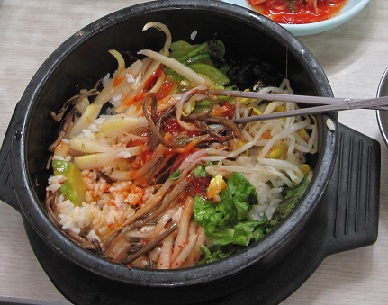
밥 literally means "cooked rice," but Korean people commonly use it to mean "a meal" in general, regardless of whether the meal actually contains rice.
examples: - ko: 밥 먹자! en: Let's **eat**! - ko: 밥 먹었어? en: Have you **eaten**? (informal) - ko: 저는 아침식사로 **밥**을 먹었어요 en: I ate **rice** for breakfast - ko: 저는 **밥**을 많이 먹었어요 en: I ate a lot of **food (rice)** - ko: 저는 **밥**을 먹고 갈 거에요 en: I will **eat** and then go - ko: 반찬 en: side dish examples: - ko: 반찬을 남기지 마세요 en: Don't leave any **ban-chan (side dishes)** - ko: 반찬을 먹을 만큼만 가져가세요 en: Only take the amount of **side-dishes** that you will eat - ko: 식사 en: meal notes: |식사 is also used when people order some sort of soup/stew at a restaurant. For example, at a Korean BBQ restaurant you might say "식사만 할 거예요," meaning "I'm just going to have [this type of] meal."
examples: - ko: 식사 할 거에요? en: Will you **eat**? - ko: 식사 하셨어요? en: Have you **eaten**? (formal) - ko: 물 en: water examples: - ko: 물 주세요 en: "**Water**, please" - ko: 물을 갖다 주세요 en: Please go and get me **water** - ko: 물을 이 컵에 따라 주세요 en: Please pour **water** into this cup - ko: 물은 셀프입니다 en: "**Water** is self-serve" - ko: 음료수 en: beverage examples: - ko: 어떤 **음료수**를 좋아해요? en: What **beverage** do you like? notes: Generated by Claude - ko: "**음료수**를 냉장고에서 꺼내 줄래요?" en: Can you take a **beverage** out of the fridge for me? notes: Generated by Claude - ko: 맥주 en: beer examples: - ko: 맥주 2잔 주세요 en: Two glasses of **beer**, please - ko: 소주 en: a type of Korean traditional alcohol notes: |[A strong, clear distilled liquor, similar in strength to vodka; probably the most commonly consumed alcoholic drink in Korea]
examples: - ko: 소주를 좀 더 따라 줄까요? en: Shall I pour you a bit more **soju**? - ko: 소주 2병 주세요 en: Please give me two bottles of **soju** - ko: 막걸리 en: a type of Korean traditional alcohol notes: |[A milky, lightly sparkling rice wine, lower in alcohol content than 소주]
examples: - ko: 막걸리를 좋아해요? en: Do you like **makgeolli**? - ko: 콜라 en: cola (Coke/Pepsi) examples: - ko: "**콜라** 한 잔 주세요" en: One glass of **cola**, please notes: Generated by Claude - ko: 저는 **콜라**보다 사이다를 더 좋아해요 en: I like cider more than **cola** notes: Generated by Claude - ko: 사이다 en: '"cider" (this tastes similar to Sprite/7-Up)' notes: |[Not alcoholic cider — 사이다 is a clear, carbonated soft drink similar to Sprite/7-Up]
examples: - ko: "**사이다** 있어요?" en: Do you have **cider (Sprite-like soda)**? notes: Generated by Claude - ko: 이 **사이다**는 너무 달아요 en: This **cider (soda)** is too sweet notes: Generated by Claude - ko: 고기 en: meat examples: - ko: 저는 어제 **고기**를 2번 먹었어요 en: I ate **meat** twice yesterday - ko: 돼지고기 en: pork examples: - ko: 저는 지난 번에 **돼지고기**를 먹었어요 en: We ate **pork** last time - ko: 소고기 en: beef examples: - ko: 저는 **소고기**를 안 먹어요 en: I don't eat **beef** notes: Generated by Claude - ko: "**소고기**가 너무 비싸요" en: "**Beef** is too expensive" notes: Generated by Claude - ko: 해물 en: seafood examples: - ko: "**해물**을 좋아해요?" en: Do you like **seafood**? notes: Generated by Claude - ko: 이 식당은 **해물**이 유명해요 en: This restaurant is famous for its **seafood** notes: Generated by Claude - ko: 재료 en: ingredients examples: - ko: 김치에 **재료**가 많이 들어가요 en: There are a lot of **ingredients** in kimchi - ko: 국내산 en: some product/food from Korea notes: |~산 is attached after a country name to indicate the origin of a food product (e.g. "호주산" = "from Australia"). If the product is from Korea, "국내산" (domestic) is used instead of "한국산."
examples: - ko: 소고기 – 호주산 en: Beef – Australia - ko: 돼지고기 – 미국산 en: Pork – America - ko: 김치 – 국내산 en: Kimchi – Korea (domestic) - ko: 식당 en: restaurant examples: - ko: 그 **식당**이 어디에 있는 지 알아요? en: Do you know where that **restaurant** is? - ko: "**식당**은 은행 옆에 있어요" en: The **restaurant** is next to the bank - ko: 그 **식당**이 오래되었어요 en: That **restaurant** is old - ko: 맛집 en: delicious restaurant examples: - ko: "**맛집**을 핸드폰으로 검색해보자" en: Let's search for a good **restaurant** on my phone - ko: 젓가락 en: chopstick examples: - ko: "**젓가락**으로 먹을 수 있어요?" en: Can you eat with **chopsticks**? notes: Generated by Claude - ko: "**젓가락**이 하나만 있어요" en: There is only one **chopstick** notes: Generated by Claude - ko: 숟가락 en: spoon examples: - ko: "**숟가락**을 갖다 주세요" en: Please bring me a **spoon** notes: Generated by Claude - ko: "**숟가락**으로 국을 드세요" en: Eat the soup with a **spoon** notes: Generated by Claude - ko: 포크 en: fork examples: - ko: "**포크**가 있어요?" en: Do you have a **fork**? notes: Generated by Claude - ko: 저는 **포크**로 먹는 걸 더 좋아해요 en: I prefer eating with a **fork** notes: Generated by Claude - ko: 접시 en: plate examples: - ko: "**접시**를 치워 주세요" en: Please clear the **plates** (from the table) - ko: 그릇 en: bowl examples: - ko: 이 **그릇**은 너무 작아요 en: This **bowl** is too small notes: Generated by Claude - ko: "**그릇**을 하나 더 주세요" en: Please give me one more **bowl** notes: Generated by Claude - ko: 탁자 en: table examples: - ko: "**탁자** 위에 물이 있어요" en: There is water on the **table** notes: Generated by Claude - ko: 이 **탁자**는 4명이 앉을 수 있어요 en: Four people can sit at this **table** notes: Generated by Claude - ko: 상 en: small traditional Korean table that folds out notes: |[A low, often foldable table used when sitting on the floor to eat, as opposed to 탁자, which refers to a more general/modern table]
examples: - ko: "**상**을 펴 주세요" en: Please fold out the **table** notes: Generated by Claude - ko: "**상** 위에 반찬이 많아요" en: There are a lot of side dishes on the **table** notes: Generated by Claude - ko: 냄비 en: pot examples: - ko: "**냄비**에 물을 끓여요" en: I'm boiling water in the **pot** notes: Generated by Claude - ko: 이 **냄비**는 너무 뜨거워요 en: This **pot** is too hot notes: Generated by Claude - ko: 냉장고 en: refrigerator examples: - ko: "**냉장고**에 물이 있어요" en: There is water in the **refrigerator** notes: Generated by Claude - ko: "**냉장고**를 열어 주세요" en: Please open the **refrigerator** notes: Generated by Claude - ko: 김치냉장고 en: kimchi refrigerator notes: |Many Korean households have a separate refrigerator dedicated just to kimchi, called 김치냉장고, kept at a different temperature/humidity ideal for storing and fermenting kimchi.
examples: - ko: "**김치냉장고**에 김치가 많아요" en: There is a lot of kimchi in the **kimchi fridge** notes: Generated by Claude - ko: 우리 집에는 **김치냉장고**가 있어요 en: We have a **kimchi fridge** at our house notes: Generated by Claude - ko: 냉동실 en: freezer examples: - ko: 고기를 **냉동실**에 넣어 주세요 en: Please put the meat in the **freezer** notes: Generated by Claude - ko: "**냉동실**이 꽉 찼어요" en: The **freezer** is full notes: Generated by Claude - ko: 메뉴 en: menu notes: |Korean people use 메뉴 to refer to the food that can be served at a restaurant/other place, not to the physical booklet listing the food. In English, "menu" usually refers to the physical booklet, which in Korean is called "메뉴판."
examples: - ko: 오늘 점심 **메뉴**가 뭐야? en: What is today's lunch **menu**? verbs: - ko: 먹다 en: to eat examples: - ko: 다 **먹을** 수 있어요? en: Can you **eat** it all? - ko: 더 **먹고** 싶어요? en: Do you want to **eat** more? - ko: 같이 **먹자**! en: Let's **eat** together! - ko: 저는 아직 안 **먹었어요** en: I haven't **eaten** yet - ko: 많이 **드세요**! en: "**Eat** a lot (enjoy your meal) (formal)" - ko: 마시다 en: to drink examples: - ko: 뭐 **마실래요**? en: What shall we **drink**? - ko: 요리하다 en: to cook examples: - ko: 저는 김치찌개를 **요리했어요** en: I **cooked** kimchi stew notes: Generated by Claude - ko: "**요리할** 줄 알아요?" en: Do you know how to **cook**? notes: Generated by Claude - ko: 따르다 en: to pour examples: - ko: 소주를 좀 더 **따라** 줄까요? en: Shall I **pour** you a bit more soju? - ko: 물을 이 컵에 **따라** 주세요 en: Please **pour** water into this cup - ko: 주다 en: to give notes: |~아/어 주세요 ("please give [me the favor of]...") is extremely common when politely requesting something, so many example sentences with 주다 look like requests rather than the literal verb "to give."
examples: - ko: 물 **주세요** en: Water, please - ko: 맥주 2잔 **주세요** en: Two glasses of beer, please - ko: 소스를 더 **주세요** en: Please **give** me more sauce - ko: 조금 더 **주세요** en: Just a little bit more, please - ko: 맛있는 것을 사 **줄게요** en: I will buy you something delicious - ko: 주문하다 en: to order notes: |[More formal/neutral sounding than 시키다; commonly used when speaking about the act of ordering itself, e.g. at a counter]
examples: - ko: "**주문할게요**" en: I'm going to **order** now - ko: "**주문했어요**?" en: Did you **order**? - ko: 시키다 en: to order notes: |[Often used interchangeably with 주문하다 when ordering food, but 시키다 can also mean "to make someone do something"]
examples: - ko: 뭐 **시켰어요**? en: What did you **order**? - ko: 더 **시킬까요**? en: Shall we **order** more? - ko: 계산하다 en: to pay notes: |[Literally "to calculate"; used specifically for paying a bill, e.g. at a restaurant or store]
examples: - ko: "**계산이요**" en: Said when you want to pay for your meal at a restaurant - ko: 내다 en: to pay notes: |[Used when talking about who pays/covers the cost, as opposed to 계산하다, which is used for the act of settling the bill]
examples: - ko: 제가 **낼게요** en: I'll **pay** - ko: 점심을 누가 **냈어요**? en: Who **paid** for lunch? adjectives: - ko: 비싸다 en: expensive examples: - ko: 이 식당은 너무 **비싸요** en: This restaurant is too **expensive** notes: Generated by Claude - ko: 소고기가 **비싸요** en: Beef is **expensive** notes: Generated by Claude - ko: 싸다 en: cheap examples: - ko: 이 김밥은 정말 **싸요** en: This kimbab is really **cheap** notes: Generated by Claude - ko: 더 **싼** 식당이 있어요? en: Is there a **cheaper** restaurant? notes: Generated by Claude - ko: 배고프다 en: hungry (sometimes said as 배가 고프다) examples: - ko: 아직 **배고파요**? en: Are you still **hungry**? - ko: 배부르다 en: full (sometimes said as 배가 부르다) examples: - ko: 저는 너무 **배불러요** en: I am too **full** notes: Generated by Claude - ko: "**배불러서** 더 못 먹어요" en: I'm too **full**, I can't eat any more notes: Generated by Claude - ko: 맛있다 en: delicious notes: |The word "맛" means "taste." So 맛있다 (or 맛이 있다) literally means "to have taste," and 맛없다 (or 맛이 없다) literally means "to not have taste."
examples: - ko: 이 게 **맛있어요** en: This is **delicious** - ko: 제일 **맛있는** 게 뭐에요? en: What is the most **delicious** thing? - ko: "**맛있게** 드세요!" en: Bon Appétit (formal) - ko: 맛없다 en: not delicious notes: |Literally "to not have taste" (맛이 없다). See notes on 맛있다.
examples: - ko: 이 음식은 좀 **맛없어요** en: This food is a bit **not delicious** notes: Generated by Claude - ko: 어제 먹은 것은 **맛없었어요** en: What I ate yesterday was **not delicious** notes: Generated by Claude - ko: 짜다 en: salty notes: |[In English, "salty" is usually only used when something literally has too much salt. In Korean, 짜다 is used much more broadly to describe anything over-seasoned, so it's heard far more often than its English counterpart.]
examples: - ko: 이 국은 너무 **짜요** en: This soup is too **salty** notes: Generated by Claude - ko: 반찬이 좀 **짜요** en: The side dishes are a bit **salty** notes: Generated by Claude - ko: 느끼하다 en: greasy notes: |[Describes food, or the feeling after eating food, that is heavy/doughy/oily — commonly spaghetti, pizza, bread, or anything with a lot of cheese/wheat. Eating something pickled is a common way to counteract this feeling, which is why pickles are often served with pizza or pasta in Korea.]
examples: - ko: 이 피자는 너무 **느끼해요** en: This pizza is too **greasy** notes: Generated by Claude - ko: 스파게티를 먹으면 좀 **느끼해요** en: When I eat spaghetti, I feel a bit **greasy** notes: Generated by Claude - ko: 고소하다 en: nutty notes: |[Describes a nutty taste/aroma, most commonly associated with sesame oil (참기름); hard to translate perfectly into English]
examples: - ko: 참기름 냄새가 **고소해요** en: The sesame oil smells **nutty** notes: Generated by Claude - ko: 이 반찬은 **고소한** 맛이 나요 en: This side dish has a **nutty** taste notes: Generated by Claude meals: - ko: 아침(식사) ko_text: 아침 en: breakfast notes: |아침 also means "morning" (hence 아침식사 literally means "morning meal"), but context always makes clear whether the speaker means "morning" or "breakfast." For example:
저는 아침에 일찍 일어났어요 = I woke up early in the morning
저는 아침을 먹었어요 = I ate breakfast
The same applies to 점심 and 저녁.
examples: - ko: 저는 **아침식사**로 밥을 먹었어요 en: I ate rice for **breakfast** - ko: 저는 **아침**에 일찍 일어났어요 en: I woke up early in the **morning** - ko: 저는 **아침**을 먹었어요 en: I ate **breakfast** - ko: 점심(식사) ko_text: 점심 en: lunch notes: |Like 아침, 점심 can stand alone (without 식사 attached) to mean "lunch," and context makes it clear whether "lunch" is meant. Unlike 아침, 점심 does not separately mean "midday" the way 아침 means "morning" — in everyday use, 점심 simply refers to the meal.
examples: - ko: "**점심**으로 뭐 먹고 싶어요?" en: What do you want to eat for **lunch**? - ko: "**점심**을 먹었어?" en: Did you eat **lunch**? - ko: "**점심**으로 뭐 먹었어요?" en: What did you eat for **lunch**? - ko: "**점심**은 어땠어요?" en: How was **lunch**? - ko: "**점심**을 누가 냈어요?" en: Who paid for **lunch**? - ko: 저녁(식사) ko_text: 저녁 en: dinner notes: |Like 아침, 저녁 can be used alone (without 식사 attached) to mean "dinner." 저녁 also means "evening," and just as with 아침, context makes it clear whether the speaker means "evening" or "dinner." For example:
저는 저녁에 운동해요 = I exercise in the evening
저는 저녁을 먹었어요 = I ate dinner
examples: - ko: "**저녁**으로 뭐 먹을래요?" en: What shall we eat for **dinner**? notes: Generated by Claude - ko: 저는 **저녁**을 아직 안 먹었어요 en: I haven't eaten **dinner** yet notes: Generated by Claude 반찬: - ko: (배추)김치 en: (cabbage) kimchi notes: |
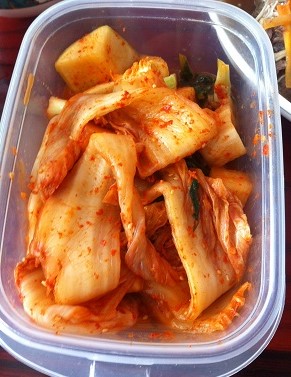
There are many types of kimchi, but when Korean people just say "김치" without specifying, they usually mean the kimchi made from Korean cabbage (배추). The full name "배추김치" is rarely necessary — "김치" alone is understood to mean this type.
examples: - ko: "**김치**에 재료가 많이 들어가요" en: There are a lot of ingredients in **kimchi** - ko: "**김치**가 너무 매워요" en: The **kimchi** is too spicy notes: Generated by Claude - ko: 저는 **김치**를 매일 먹어요 en: I eat **kimchi** every day notes: Generated by Claude - ko: 김 en: seaweed examples: - ko: "**김**을 밥이랑 같이 먹어요" en: I eat **seaweed** together with rice notes: Generated by Claude - ko: "**김**이 바삭바삭해요" en: The **seaweed** is crispy notes: Generated by Claude - ko: 깍두기 en: diced radish kimchi notes: |[Made from radish cut into small cubes; one of the most common banchan alongside 배추김치]
examples: - ko: "**깍두기**도 좀 주세요" en: Please also give me some **diced radish kimchi** notes: Generated by Claude - ko: 이 식당 **깍두기**가 맛있어요 en: This restaurant's **diced radish kimchi** is delicious notes: Generated by Claude - ko: 무생채 en: sliced radish kimchi notes: |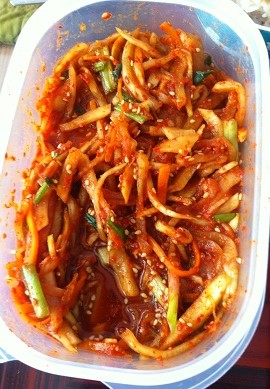
[Made from thinly sliced radish that is seasoned but not fermented, unlike most other kimchi; has a fresher, more salad-like texture]
examples: - ko: "**무생채**는 안 매워요" en: "**Sliced radish kimchi** is not spicy" notes: Generated by Claude - ko: "**무생채**를 만들어 봤어요" en: I tried making **sliced radish kimchi** notes: Generated by Claude - ko: 오이김치 en: cucumber kimchi notes: |[Made from cucumber, usually stuffed with a spicy radish/chive filling; lighter and more refreshing than cabbage kimchi]
examples: - ko: 여름에는 **오이김치**를 자주 먹어요 en: I often eat **cucumber kimchi** in the summer notes: Generated by Claude - ko: "**오이김치**가 시원해요" en: "**Cucumber kimchi** is refreshing" notes: Generated by Claude - ko: 총각김치 en: radish kimchi notes: |[Made with whole small "chonggak" radishes, often including the green tops, usually left whole or cut in half. Compare with 열무김치, which uses young summer radish, and 깍두기, which uses diced radish.]
examples: - ko: "**총각김치**는 무가 통째로 들어가요" en: "**Chonggak kimchi** has the whole radish in it" notes: Generated by Claude - ko: "**총각김치**를 먹어 본 적 있어요?" en: Have you ever tried **chonggak radish kimchi**? notes: Generated by Claude - ko: 열무김치 en: radish kimchi notes: |[Made with young summer radish (열무), which has soft leaves and thin roots. Often eaten with cold noodles (열무국수) in summer. Compare with 총각김치, which uses a different, more mature radish.]
examples: - ko: "**열무김치**는 여름에 인기가 많아요" en: "**Yeolmu kimchi** is very popular in summer" notes: Generated by Claude - ko: "**열무김치**국수를 먹고 싶어요" en: I want to eat **yeolmu kimchi** noodles notes: Generated by Claude - ko: 나물 en: seasoned herbs/vegetables notes: |[A general term for banchan made from herbs or vegetables that are blanched/cooked and then seasoned, typically with sesame oil, garlic, and salt. 콩나물 무침 is one specific example of 나물.]
examples: - ko: 저는 **나물**을 좋아해요 en: I like **seasoned vegetables** notes: Generated by Claude - ko: 이 **나물**은 고소해요 en: This **seasoned vegetable dish** is nutty notes: Generated by Claude - ko: 콩나물 무침 en: seasoned beansprout notes: |[A specific type of 나물 made from soybean sprouts (콩나물), seasoned typically with sesame oil, garlic, and salt]
examples: - ko: "**콩나물 무침**을 만들어 줄게요" en: I'll make you some **seasoned beansprouts** notes: Generated by Claude - ko: "**콩나물 무침**이 아주 고소해요" en: The **seasoned beansprouts** are very nutty notes: Generated by Claude soups: - ko: 국 en: soup (with one main ingredient and a lot of water) notes: |[More of a soup with one main ingredient and a lot of water, compared to 찌개 and 탕]
examples: - ko: "**미역국**을 먹었어요" en: I ate seaweed **soup** notes: Generated by Claude - ko: 찌개 en: stew (less water, lots of things boiled together) notes: |[More of a stew with less water than 국, and lots of ingredients boiled together]
examples: - ko: "**김치찌개**를 시켰어요" en: I ordered kimchi **stew** notes: Generated by Claude - ko: 탕 en: '"tang" (watery, but boiled for a long time with a lot of stuff in it)' notes: |[Watery like 국, but boiled for a long time and containing a lot of ingredients, often meat/bones]
examples: - ko: "**삼계탕**을 여름에 먹어요" en: I eat samgyetang (chicken ginseng **soup**) in the summer notes: Generated by Claude - ko: 미역국 en: seaweed soup examples: - ko: 생일에는 **미역국**을 먹어요 en: We eat **seaweed soup** on birthdays notes: Generated by Claude - ko: "**미역국**이 몸에 좋아요" en: "**Seaweed soup** is good for your body" notes: Generated by Claude - ko: 만둣국 en: dumpling soup examples: - ko: 설날에 **만둣국**을 먹어요 en: We eat **dumpling soup** on Lunar New Year notes: Generated by Claude - ko: "**만둣국**이 따뜻해요" en: "**Dumpling soup** is warm" notes: Generated by Claude - ko: 삼계탕 en: chicken soup with ginseng notes: |[Often eaten in the summer, believed to help restore energy during hot weather]
examples: - ko: 더운 날에는 **삼계탕**을 먹어요 en: We eat **samgyetang** on hot days notes: Generated by Claude - ko: "**삼계탕**에는 인삼이 들어가요" en: "**Samgyetang** contains ginseng" notes: Generated by Claude - ko: 닭볶음탕 en: stir fried chicken pot notes: |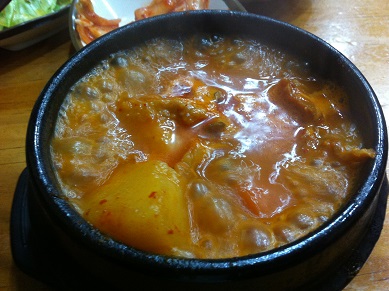
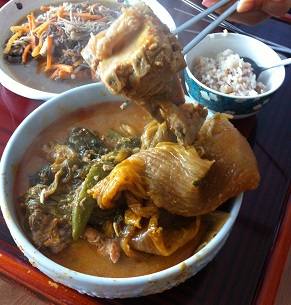
감자 also means "potato" in Korean, so many foreigners (and even some younger Korean people) incorrectly assume that 감자탕 should contain potatoes. You'll often see potatoes in 감자탕, but this is reportedly a modern phenomenon caused by people ordering 감자탕 and arguing that there should be potatoes in their "potato stew."
examples: - ko: "**감자탕**에는 감자가 없을 수도 있어요" en: "**Gamjatang** might not have any potatoes in it" notes: Generated by Claude - ko: "**감자탕**을 먹으러 가자" en: Let's go eat **gamjatang** notes: Generated by Claude - ko: 부대찌개 en: Army soup notes: |During the Korean war, the US military used to give extra food to Korean people on the street. This usually consisted of things like hot-dogs and other similar items, so Korean people at the time took all the ingredients and made a stew out of it.
examples: - ko: "**부대찌개**에는 소시지랑 햄이 들어가요" en: "**Budae-jjigae** has sausage and ham in it" notes: Generated by Claude - ko: "**부대찌개**를 라면이랑 같이 먹어요" en: I eat **budae-jjigae** together with ramen notes: Generated by Claude meat: - ko: 삼겹살 en: pork belly (similar to bacon, but thicker) notes: |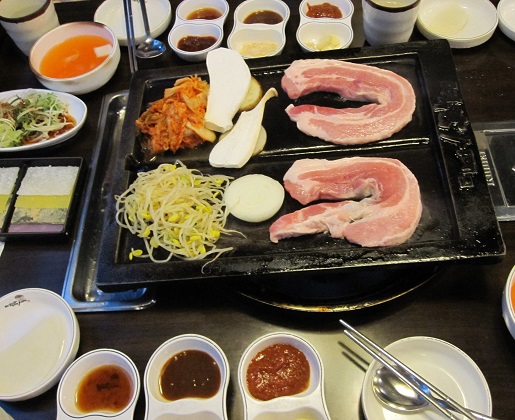
[Compare with 삼겹살, which has three layers of fat/meat; 오겹살 has five layers, making it slightly fattier]
examples: - ko: "**오겹살**은 삼겹살보다 더 기름져요" en: "**Ogyeopsal** is fattier than samgyeopsal" notes: Generated by Claude - ko: "**오겹살**을 구워 먹자" en: Let's grill and eat some **ogyeopsal** notes: Generated by Claude - ko: 목살 en: pork neck examples: - ko: "**목살**은 좀 덜 기름져요" en: "**Pork neck** is a bit less greasy" notes: Generated by Claude - ko: 저는 **목살**을 제일 좋아해요 en: I like **pork neck** the most notes: Generated by Claude - ko: 갈비 en: ribs examples: - ko: "**갈비**를 먹으러 가자" en: Let's go eat **ribs** notes: Generated by Claude - ko: "**갈비**는 좀 비싸요" en: "**Ribs** are a bit expensive" notes: Generated by Claude - ko: LA 갈비 en: short ribs notes: |[Cut across the bone so several small round bones appear in each strip, unlike traditional 갈비 which is cut along the bone; named after Los Angeles, where this cut became popular]
examples: - ko: "**LA 갈비**는 뼈가 여러 개 보여요" en: "**LA galbi** has several bones visible in it" notes: Generated by Claude - ko: "**LA 갈비**를 양념에 재워 놨어요" en: I marinated the **LA galbi** notes: Generated by Claude - ko: 닭갈비 en: stir-fried chicken notes: |[Despite containing "갈비" (ribs) in the name, 닭갈비 doesn't contain ribs at all — it's stir-fried marinated chicken, usually with vegetables and rice cakes]
examples: - ko: "**닭갈비**는 맵고 맛있어요" en: "**Dakgalbi** is spicy and delicious" notes: Generated by Claude - ko: 춘천은 **닭갈비**로 유명해요 en: Chuncheon is famous for **dakgalbi** notes: Generated by Claude - ko: 불고기 en: meat marinated in sweet soy sauce notes: |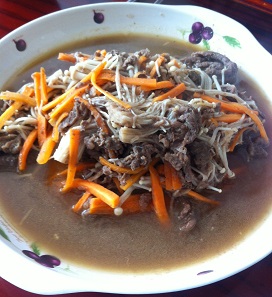
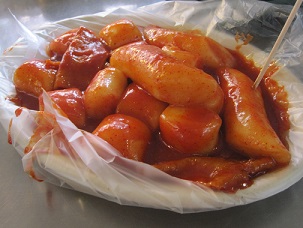
Rice cakes (떡) are soft and doughy, and are not the same as the dry, crunchy rice cakes that are common in the West.
examples: - ko: "**떡**은 쫄깃쫄깃해요" en: "**Rice cakes** are chewy" notes: Generated by Claude - ko: 저는 **떡**을 명절에 먹어요 en: I eat **rice cakes** during holidays notes: Generated by Claude - ko: 떡볶이 en: Spicy rice cakes notes: |